
Assess fabric and stains first. When in doubt, keep the dress dry and seek a professional conservator or specialist cleaner rather than trying a home remedy. If your gown is a modern, stable fabric with surface stains, a trusted dry cleaner is often a convenient, eco-friendly option. Vintage or heavily beaded dresses usually need conservator-level care and should never go through a washing machine.
Key Takeaways
Choosing the appropriate cleaning method based on fabric type and condition is crucial to preserve a wedding dress without causing damage.
| Point | Details |
|---|---|
| Assess fabric and embellishments | Identify the fabric, check for beading or metallic threads, and evaluate for damage before any cleaning attempts. |
| Handle stains with care | Blot stains quickly with cold water and document their locations before professional cleaning to prevent permanent damage. |
| Match cleaning method to fabric | Use dry cleaning for sturdy, modern fabrics and consider wet cleaning or conservator treatment for antique or fragile gowns. |
| Use eco-friendly professional options | EcoSpin Laundry offers quick, eco-conscious dry cleaning for stable fabrics, with online scheduling and a 24-hour turnaround. |
| Prioritize proper storage | Store gowns in acid-free tissue within breathable archival boxes, avoid hanging for long periods, and regularly inspect to prevent deterioration. |
How to assess fabric, embellishments and damage
Before anyone touches your gown with water, solvent or a cloth, you need to know what it is made of. The fabric and construction determine whether professional dry cleaning is safe or whether you need specialist wet cleaning or a conservator.
Start with a visual and tactile check:
- Identify the base fabric: silk, satin, crepe, organza, chiffon and tulle all react differently to moisture and heat.
- Check for lace panels, beading, sequins or metallic embroidery, since these often need hand treatment rather than machine processes.
- Look for brittleness, tearing or fraying along seams, which signals fragile, aged fibres.
- Check metal threads or beads for tarnish or discolouration, a sign the dress needs conservator-level handling.
- Note heavy yellowing across large areas, which usually points to oxidation rather than a simple surface stain.
As a rule of thumb, modern dresses in stable synthetic or blended fabrics usually tolerate professional dry cleaning well. Antique gowns, heirloom pieces or anything with visible fibre damage call for a different approach. The Victoria and Albert Museum’s guidance on vintage wedding dresses notes that there is no single cleaning method that works for every gown, since silk, lace and tulle each respond differently and a specialist assessment is often the safest first step.
Step-by-step emergency spot-cleaning to protect your dress
What you do in the first hour after a spill matters more than what happens afterward. Quick, careful first aid buys time and keeps your options open for professional treatment.
- Move the dress away from the source of the spill so nothing else makes contact with the fabric.
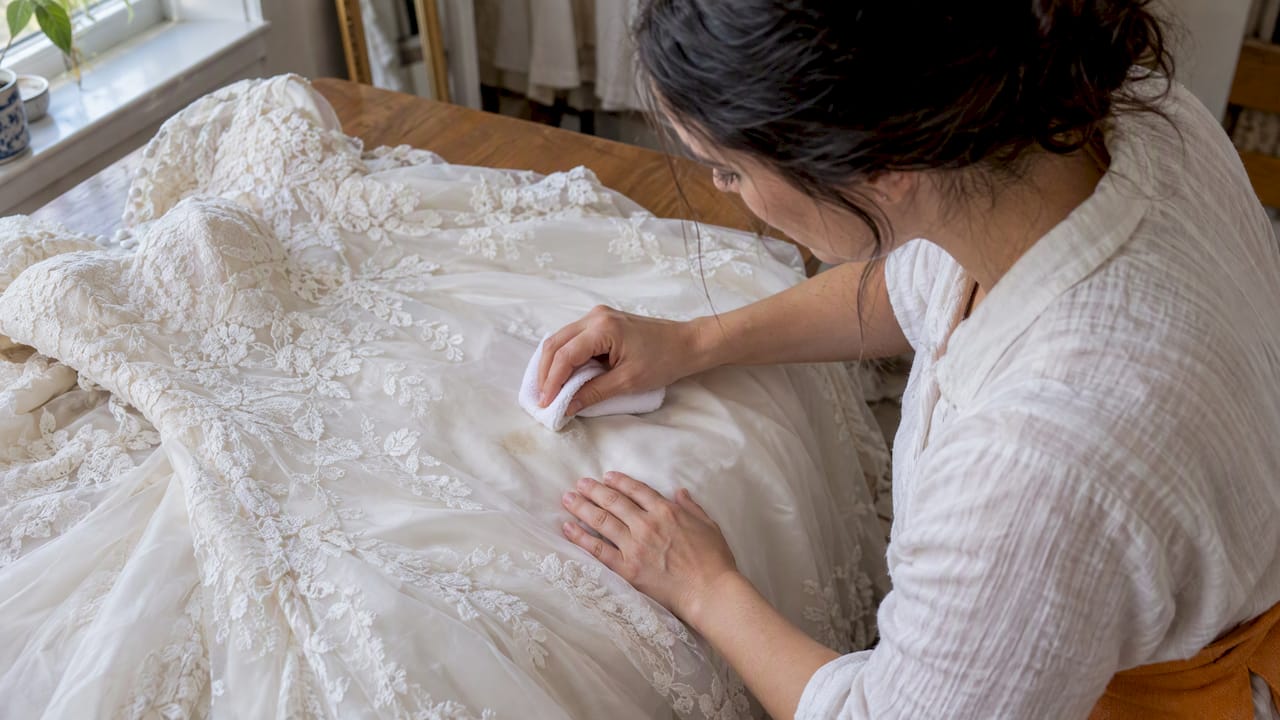
- Blot the stain gently with a clean, white cotton cloth, working from the outside of the mark inward.
- Lift off any solid debris with a dull edge, never rubbing it into the fibres.
- For water-soluble marks only, dab with a small amount of cold water on a white cloth, then blot dry.
- Avoid bleach, enzyme-based stain removers and anything stronger than cold water; these can set a stain permanently or damage delicate fibres.
- Never put the dress in a washing machine or tumble dryer, even on a delicate cycle.
- Photograph each stain with a note of location and likely cause (wine, grass, makeup) before you pack the dress.
- Transport the gown in a clean, breathable garment bag or wrapped in a cotton sheet, never sealed in plastic.
Pro Tip: Keep the gown upright or loosely folded during transport. Cramming it into a bag increases the chance of creasing that becomes harder to remove later.
Conservators at Museum WA’s textile treatment guidelines point out that simple, well-documented emergency care, including photos and careful blotting, preserves later treatment options and often keeps the final cleaning bill lower.
Professional cleaning options: dry cleaning, wet cleaning and conservator treatment
Once your gown is stable and safely stored, the next decision is which professional route fits it. There are three broad tiers, and matching your dress to the right one protects both the fabric and your budget.
Commercial dry cleaning uses solvent-based processes to lift oils and many common stains. It works well for sturdy, modern fabrics without extensive beading or metallic thread, but it has limits on delicate lace, antique silk or heavily embellished bodices.
Specialist wet cleaning relies on non-ionic, pH-neutral soap solutions, careful colourfastness testing and extensive rinsing rather than solvents. The Museum WA conservation manual describes this as an interventive treatment that conservators use only when dirt or staining threatens the garment, since repeated wet cleaning can weaken some textiles.
Conservator treatment goes further, sometimes choosing stabilisation methods like support netting or mending over full stain removal, because removing a stain can cause irreversible harm to antique fabric. The V&A’s conservators favour this minimum-intervention approach and note that some historical staining is deliberately retained as part of a garment’s story.
Price depends on fabric type, the amount of embellishment, how extensive the soiling is and whether repairs are needed alongside cleaning. Before handing over your gown, ask any cleaner:
- Do you test colourfastness before wet cleaning or solvent treatment?
- What solvents or detergents do you use, and are they safe for beading and metallic thread?
- How do you handle delicate trims by hand versus machine?
- Is the dress insured while in your care?
- Do you offer pickup and delivery, and what is the turnaround?
For modern, stable gowns without antique or heavily beaded elements, EcoSpin Laundry’s professional dry cleaning service offers eco-friendly detergents, online pickup scheduling and a 24-hour turnaround, making it a practical option when conservator-level treatment is not required.
How to preserve and store your wedding dress long-term
Cleaning is only half the job. How you store a wedding dress afterward determines whether it stays pristine for years or starts yellowing within months.
- Use acid-free tissue paper to pad folds and separate fabric layers, preventing creases from setting permanently.
- Store the gown in a breathable archival box rather than a sealed plastic bag, since trapped moisture encourages mildew and yellowing.
- Avoid hanging the dress for long periods, as the weight of the fabric and any beading can stress the seams and shoulders.
- Keep the box flat in a cool, dark, dry place away from direct sunlight and temperature swings.
- Inspect the dress every 6 to 12 months and repack it annually where possible, refreshing the tissue paper each time.
- Handle the gown with clean white cotton or nitrile gloves, and avoid wearing perfume or lotion right before handling it.
Pro Tip: Keep the storage box away from attics, basements and garages, where humidity and temperature swings are hardest to control.
This approach follows the thinking behind museum textile conservation guidance: minimal handling, careful materials and checking in on the garment regularly rather than leaving it untouched for decades. Bare-hand contact can transfer oils that tarnish metal threads or discolour fabric over time, which is exactly what archival gloves and tissue are designed to prevent.
What professional wedding dress cleaning typically costs
Pricing for wedding dress cleaning varies widely because it depends on fabric, the extent of embellishment and how much soiling or damage needs addressing. A simple satin gown with light staining costs less to clean than an heirloom piece with hand beading, lace appliqué or structural repairs.
Rather than expecting one fixed number, think in terms of a range driven by these factors:
- Fabric type: Silk and delicate lace typically require more careful, time-intensive handling than sturdy synthetic blends.
- Embellishment: Beading, sequins and metallic thread add labour because these elements often need protection or hand treatment during cleaning.
- Soiling extent: A dress with multiple stain types or deep-set marks takes longer to treat safely than one with light surface dirt.
- Repairs needed: Loose beading, torn seams or weakened fabric may require mending alongside cleaning, adding to the overall cost.
For dry cleaning through EcoSpin Laundry, pricing is available on request through our pricing page, where you can see rates for related services and request a quote specific to your gown. Asking for an assessment before committing helps you understand exactly what your dress needs and avoids surprises later.
How long does wedding dress cleaning usually take
Turnaround time depends heavily on which professional route your dress needs. A straightforward dry-cleaning job on a modern gown moves much faster than a full conservator treatment involving testing, stabilisation and hand finishing.
Commercial dry cleaning for a stable, modern fabric is often the quickest option. Some laundry and dry-cleaning services offer standard turnarounds of about 24 hours, which works well for brides who need their dress ready quickly after the wedding or before an anniversary or a second wear.
Specialist wet cleaning and conservator treatment generally take longer. Conservators test colourfastness, clean in stages and dry garments slowly without direct heat, since rushing any of these steps risks damaging delicate fibres. A gown with heavy beading, antique lace or structural repairs may need several days to weeks depending on the extent of the work.
If your dress is a modern fabric with no complex embellishment, scheduling a pickup and expecting a fast return is realistic. If assessment reveals fragility or extensive hand-finishing needs, build in extra time and treat the longer timeline as part of protecting the gown rather than a delay to rush past.
Common wedding dress stains and how to treat each one
Different stains need different first responses, and treating one the wrong way can set it permanently before a professional ever sees the dress.
- Red wine: Blot immediately with a clean white cloth, working inward from the edges. Avoid rubbing, and never apply salt or club soda directly to delicate fabrics, since these home remedies can interact unpredictably with silk or embellishments.
- Grass and dirt: Let any mud dry completely, then gently brush off loose particles before blotting the remaining mark with cold water. Avoid scrubbing, which pushes pigment deeper into the weave.
- Makeup and foundation: Blot rather than wipe, since wiping spreads oil-based pigment across more fibres. These stains often need solvent-based treatment, which is best left to a professional.
- Champagne and other drinks: Blot promptly with cold water on a white cloth. Sugar residue left untreated can attract dirt and yellow over time, so documenting the stain’s location for your cleaner matters.
- Perspiration and body oils: These often appear only after some time and can cause yellowing along the bodice and underarms. A specialist dry cleaner or conservator can address this more safely than a home enzyme treatment, which may damage delicate fabric.
In every case, the safest immediate step is cold water and gentle blotting, paired with clear notes for whoever cleans the dress professionally.
Why minimal intervention matters more than a quick fix
The instinct after a wedding is to get every mark out as fast as possible. Conservators see it differently: removing a stain can sometimes do more lasting harm than leaving it for a specialist to assess properly. That is the thinking behind every recommendation here, from blotting instead of scrubbing to choosing wet cleaning over harsh solvents for fragile fabric.
A dress that matters enough to preserve for decades deserves a pause before action, not a rush to the nearest detergent. If your gown is modern and stable, booking a trusted dry cleaner quickly protects it. If it shows signs of fragility, arranging a proper assessment before anyone touches it is the step that protects its value longest.
— Mamero
Book professional wedding dress cleaning with EcoSpin Laundry
For brides whose dresses are modern, stable fabrics without complex conservation needs, we offer a practical path: professional dry cleaning with eco-friendly detergents, free doorstep pickup and a 24-hour turnaround.

Our standard turnaround across laundry and dry-cleaning services is typically within a day, which means your gown can be back in your hands quickly once it has been assessed and cleaned. When you book through our dry-cleaning service page, include the fabric type, clear photos of any stains and the date of the wedding so we can prepare the right approach before pickup. If you would like to see pricing across our services first, our pricing page lists current rates for related laundry work. Schedule your pickup online and let us handle the rest from collection to delivery.
FAQ
How much will it cost to clean a wedding dress?
Cost depends on fabric, embellishment and the extent of staining or damage, so there is no single fixed price across the industry. For EcoSpin Laundry’s dry-cleaning service, pricing is available on request through our pricing page, where you can get a quote specific to your gown.
What can I use to clean my wedding dress?
For fresh stains, blot gently with a clean white cotton cloth and cold water, avoiding bleach, enzyme detergents and machine washing. Beyond basic first aid, conservation guidance recommends non-ionic, pH-neutral soap solutions applied by a specialist rather than household cleaning products.
Is it worth getting a wedding dress dry cleaned?
Yes, for most modern gowns in stable fabrics, professional dry cleaning removes oils and stains that home treatment cannot safely address. For vintage or heavily beaded dresses, specialist conservation guidance suggests wet cleaning or conservator assessment instead, since dry-cleaning solvents are not always suitable for delicate or antique fibres.
How best to clean a wedding dress?
Start by identifying the fabric and checking for beading, lace or metallic thread, since this determines whether dry cleaning, wet cleaning or conservator treatment is appropriate. Private conservators are generally the right route for valuable or vintage gowns, since the National Archives of South Africa notes that national institutions typically do not accept private items for conservation due to limited capacity.

