
Schedule professional office carpet cleaning on a recurring basis rather than treating it as a one-off fix. A proper service delivers deep-extraction or steam cleaning, targeted stain removal, and fast drying using eco-friendly detergents that are safe for busy workplaces. This guide covers how often to book, what to check before you sign a contract, what it costs, and how to prepare your space.
Key Takeaways
Scheduling regular professional office carpet cleaning with deep-extraction methods and eco-friendly products maintains hygiene, appearance, and prolongs carpet lifespan.
| Point | Details |
|---|---|
| Regular vacuuming | Vacuum high-traffic zones daily and other areas multiple times weekly to prevent dirt buildup and protect carpet quality. |
| Appropriate cleaning schedule | Deep-clean carpets quarterly or semi-annually using hot water extraction to remove embedded dirt and allergens effectively. |
| Choose qualified providers | Select providers with insurance, proper equipment, and documented safety measures to ensure safe and effective cleaning. |
| Prioritize eco-friendly methods | Use contractors that provide SABS-approved, eco-friendly cleaning agents with proper PPE and safety documentation. |
| Plan office prep | Clear electronics, move furniture, and schedule during quiet times to optimize cleaning and ensure carpets dry quickly. |
What professional office carpet cleaning includes
A quote that only says “carpet cleaning” tells you very little. Ask providers to break down the process so you know exactly what you are paying for and can compare quotes properly.
A standard professional visit typically includes:
- Vacuuming and pre-treatment: removing loose soil and applying a pre-spray to loosen embedded dirt before deep cleaning.
- Spot and stain treatment: targeted work on coffee spills, ink marks and high-traffic scuffing using appropriate chemical agents.
- Hot water extraction or steam cleaning: the main deep-clean method, using hot water and cleaning solution injected and then extracted under pressure.
- Grooming: brushing the pile upright so carpets dry evenly and look refreshed rather than matted.
- Drying and blow-drying: speeding up moisture evaporation with air movers so floors are safe to walk on sooner.
Some contractors offer add-ons worth asking about: stain-resistant protectant coatings, deodorising treatments and anti-microbial applications for carpets in reception areas or near kitchens.
Equipment matters as much as the method. Industrial hot-water extractors and shampoo vacs produce a deeper clean than consumer-grade machines, while low-noise wet-suction units let cleaning happen during office hours without disrupting calls or meetings. Drying times vary with carpet density and airflow, but most offices can expect floors to be fully dry within a few hours when air movers are used, which matters when you are planning around the next business day.
Why regular professional carpet cleaning matters for offices
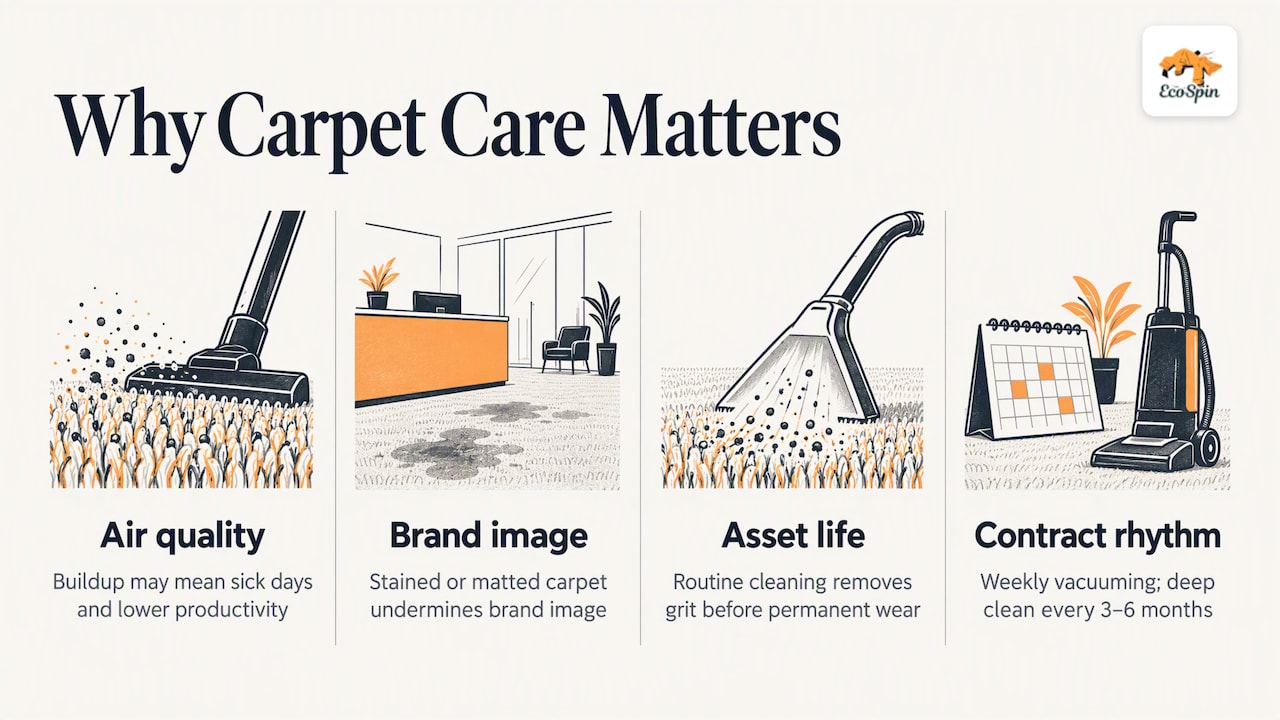
Carpets trap dust, allergens and bacteria that ordinary vacuuming cannot fully remove. Over time, this buildup affects indoor air quality, which can contribute to more sick days and lower productivity among staff who sit near heavily soiled flooring.
Appearance matters just as much as hygiene, particularly in reception areas and boardrooms where clients form an impression within seconds of walking in. Stained or matted carpet undermines a brand’s image regardless of how well the rest of the office is maintained.
There is also a cost argument. Carpets that are cleaned on a set schedule last longer because embedded grit, which acts like sandpaper on fibres, gets removed before it causes permanent wear. Replacing commercial carpet is a significant capital expense, so protecting that investment through routine maintenance usually costs less over time than reactive deep cleans or early replacement.
Public-sector cleaning contracts commonly build this logic into their specifications. Tender and contract scope documents typically require weekly vacuuming alongside deep shampoo or extraction cleaning every three to six months, treating the cadence as part of asset protection rather than an optional extra. If a government contract specifies that rhythm, it is a reasonable benchmark for a private office too.
Employers also carry a general duty to maintain a safe, healthy workplace under the Occupational Health and Safety Act, and a documented cleaning schedule is a straightforward way to support that obligation.
Recommended schedule and cleaning frequencies for offices
Getting the cadence right balances cost against appearance and hygiene. Base your schedule on traffic levels, not just calendar convenience.
- Vacuum regularly in high-traffic zones: entrances, reception floors and main walkways accumulate grit fastest and need attention every working day.
- Vacuum multiple times weekly in general work areas: open-plan workstation floors can usually go a little longer between passes than entrances.
- Vacuum boardrooms and meeting rooms on a weekly basis, or before any client-facing meeting, since appearance matters most in these spaces.
- Deep-clean every few months, typically quarterly to semi-annually using hot water extraction or steam cleaning, matching the interval commonly specified in contract cleaning scopes.
- Shorten the deep-clean interval for hospitality-adjacent or very high-traffic areas, such as canteens or shared lobbies, where soil builds up faster than in a typical office floor.
- Recalculate frequency when your floor plan changes, since adding desks or shifting foot traffic patterns changes which zones need attention first.
A simple way to plan this: map your total floor area in square metres, flag the zones with the heaviest footfall, and assign each zone its own vacuuming and deep-clean cadence rather than applying one blanket schedule to the whole office.
How to choose a commercial carpet cleaning provider
Picking the right provider is largely a documentation and process exercise. Request the following before signing anything.
- Proof of insurance covering liability for damage to carpets, furniture or the building during the clean.
- Safety Data Sheets (SDS) for every chemical used, which contract cleaning specifications.pdf) require as standard practice.
- Confirmation of SABS-approved cleaning materials, which the same specifications call for where applicable.
- A description of the equipment used: hot-water extraction machines, low-noise vacuums and quick-dry air movers signal a provider equipped for occupied office environments.
- Availability outside business hours, so cleaning does not interrupt meetings, calls or client visits.
- Written guarantees on spot retouches, service-level response times, and invoicing terms, especially if you are negotiating a recurring contract.
Pro Tip: Ask for a sample RFQ response from the provider, then check whether their SDS and SABS documentation is attached rather than promised “on request.” A provider who sends it proactively is usually better organised operationally.
A short checklist you can lift directly into a request for quotation: ask what extraction method is used, how long drying takes for your specific carpet type, whether after-hours scheduling is available at no extra charge, and whether frequency discounts apply for a signed annual schedule. A provider who answers all four specifically, rather than generically, is worth shortlisting.
Eco-friendly methods and safety compliance
Compliance paperwork is not just red tape. SABS-approved materials and SDS documentation protect your staff from chemical exposure risks and give you a paper trail if a tender or audit asks for one. Contract cleaning specifications require both as standard, and the same expectation increasingly shows up in private commercial contracts.
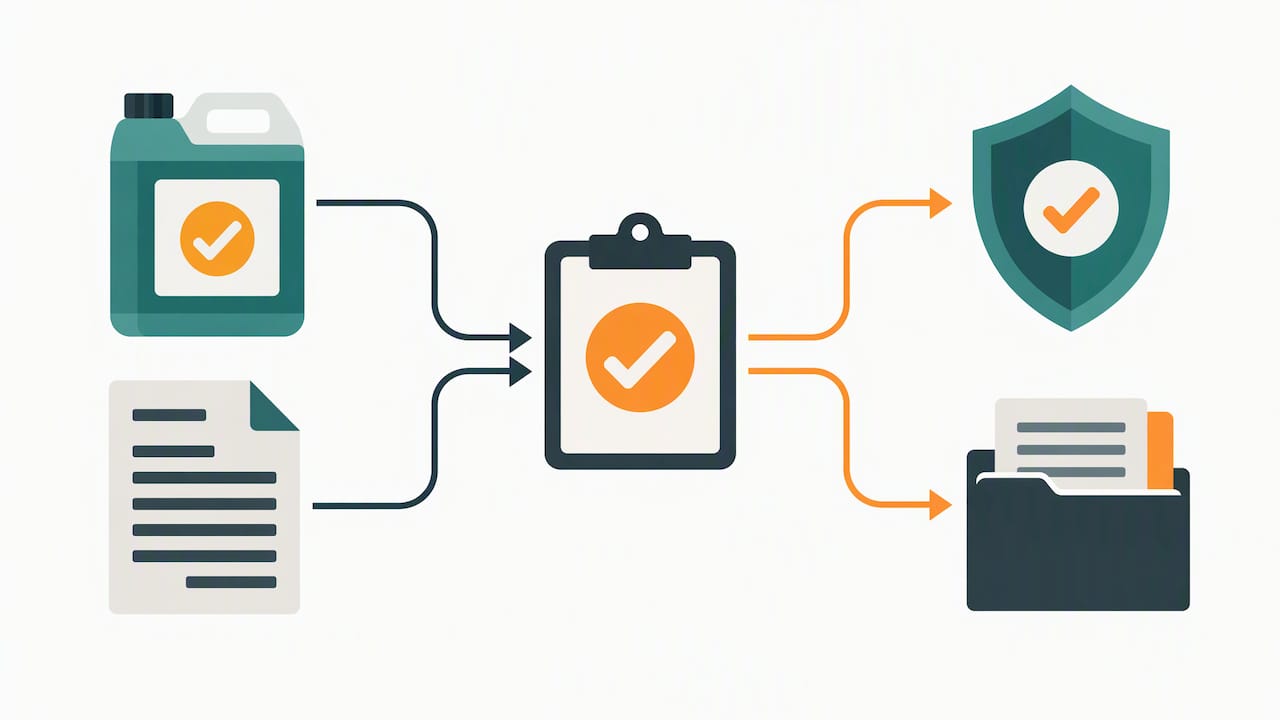
Eco-friendly detergents matter here too. They reduce residue left in carpet fibres, which lowers the chance of skin or respiratory irritation among staff who spend most of their day near treated flooring, and gentler chemistry tends to be kinder to carpet fibres over repeated cleans.
A compliant contractor should supply, as a matter of course:
- PPE for cleaning staff appropriate to the chemicals in use.
- Wet-floor signage during and immediately after the clean.
- Copies of SDS and SABS compliance documents on request, without delay.
Procurement lists for public cleaning tenders frequently name specific consumable categories, including non-foaming carpet extraction agents and combined disinfectant or deodoriser products, giving you a useful reference point when checking what a quote should list by name rather than by vague description.
We built our own carpet cleaning service around this kind of operational fit: a 24-hour turnaround and online scheduling that slot into a facilities calendar without the back-and-forth that usually comes with booking contract cleaning.
How to prepare your office for a professional carpet clean
A little preparation shortens the job and protects your assets.
- Clear and secure electronics such as printers, monitors and loose cables from areas being treated, since moisture and equipment movement do not mix well.
- Lock away sensitive documents rather than leaving them on desks in zones the crew will be working through.
- Move light furniture where possible, or confirm with the contractor whether furniture-moving is included in the quoted price.
- Schedule around drying time, booking the clean for a quiet period, such as a Friday evening or a public holiday weekend, so floors are dry before staff return.
- Post signage in advance telling staff which areas will be out of use and for how long, so nobody is caught off guard on the day.
Pricing and how to budget for office carpet cleaning
Commercial carpet cleaning quotes vary mainly on four factors: total floor area in square metres, current carpet condition, the amount of stain remediation needed, and access logistics such as after-hours work or restricted-entry buildings.
Quotes typically come in one of three formats: a rate per square metre, a flat rate per room, or a standing contract rate for recurring work. Whichever format you receive, confirm it includes pre-treatment, extraction, grooming and drying, not just the extraction pass on its own.
- Area and condition drive the base price more than anything else.
- Stain remediation for ink, grease or deep-set marks is usually quoted separately from the standard clean.
- Access and timing, including after-hours or weekend work, can add a premium depending on the provider.
- Signed recurring schedules often lower the per-visit rate compared with booking each clean individually, since the provider can plan capacity in advance.
Our own carpet cleaning service is quoted from R350, with a minimum order value of R400 applying across our service lines, giving you a starting reference point when building a facilities budget line.
Why routine carpet care should be a facilities priority
Carpet care often gets deprioritised until a client complains or a floor looks visibly worn, but by then you are paying for remediation instead of maintenance. The smarter move is treating carpet cleaning like any other recurring facilities line item: scheduled, documented and budgeted ahead of time.
What makes this easier in practice is logistics. A provider that handles scheduling online and turns work around quickly removes the administrative friction that usually causes maintenance schedules to slip. If you only take one step from this guide, make it this: put a recurring deep-clean date on the calendar today, before your next client walkthrough forces the issue.
— Mamero
Get your office carpets professionally cleaned
Office carpet cleaning can be arranged as part of a broader commercial service lineup that includes curtain cleaning and commercial laundry, often designed for quick turnaround times to minimize downtime.
Booking processes are typically similar regardless of the size of the area to be cleaned. Many providers use eco-friendly detergents, support online scheduling, offer pickup and delivery along with on-site work, and may provide business-account options for recurring invoicing.
- Carpet cleaning: deep extraction, stain treatment and fast drying, quoted from R350.
- Curtain and blind cleaning: a practical add-on when you are already booking a carpet clean for the same space.
- Commercial laundry and business accounts: suited to offices, hotels and hospitality clients needing ongoing service rather than a single visit.
Request a quote through our carpet cleaning service page and get a cleaning date on the calendar before your next client visit.
FAQ
Is there demand for commercial cleaning services?
Yes. Public-sector procurement activity shows steady, ongoing demand for cleaning services, with active 2026 tenders for cleaning contracts at major public facilities. Private commercial demand follows a similar pattern, since every occupied office needs a recurring cleaning schedule.
How do I prepare for a professional carpet cleaning?
Clear electronics and loose cables from the areas being treated, lock away sensitive documents, and move light furniture where you can. Schedule the visit for a quiet period, such as after hours or over a weekend, so carpets have time to dry before staff return.
What cleaning agents do commercial carpet cleaners use?
Professional carpet cleaners typically use a pre-spray or pre-treatment agent, a hot water extraction solution, spot and stain removers for specific marks, and sometimes a deodoriser or anti-microbial treatment. Procurement lists for cleaning contracts commonly name non-foaming carpet extraction agents and combined disinfectant-deodoriser products, among the standard consumables used.
What should I look for in a carpet cleaning provider?
Check for proof of insurance, Safety Data Sheets for the chemicals used, and confirmation that materials meet SABS requirements where applicable. Also confirm the equipment used, such as hot-water extraction machines, and ask about after-hours availability and guarantees on spot retouches before signing a contract.

