
For wet mud, blot up the liquid first and remove solid lumps before anything else, then spot-clean with a mild detergent solution and rinse thoroughly. For dried mud, let it finish drying, vacuum or scrape off the loose grit, then treat the remaining mark. If the stain is old, the carpet is wool, or the mark keeps reappearing after cleaning, call a professional rather than risk the fibres.
TL;DR:
- Removing mud effectively depends on whether it is wet or dried, with wet mud handled through blotting and rinsing, while dried mud requires vacuuming and gentle lifting.
- Quick action, such as scooping solids and blotting with a white cloth from the outside in, prevents the stain from setting or spreading deeper into the fibers.
- For set-in or stubborn stains, professional cleaning with extraction equipment and controlled drying provides a thorough removal and prevents wicking.
- Wool and natural fiber carpets need low-moisture, gentle methods to avoid damage, especially if stains have been left untreated for days.
- Routine prevention with frequent vacuuming, walk-off mats, and prompt spot cleaning extends carpet life and reduces the need for deep cleaning treatments.
Table of Contents
- Quick emergency steps: do this first
- Treating fresh, wet mud step by step
- Removing dried mud and dry soil from carpet
- Set-in marks, colour transfer, and what not to try
- Prevention and routine care to stop mud stains returning
- Recommended household and commercial cleaning solutions for mud stains
- Step-by-step drying techniques after cleaning to prevent mold or odor
- Precautions to avoid spreading the stain during cleaning
- Specific advice for different carpet materials and pile types
- When DIY makes sense and when to call a pro
- Professional carpet cleaning when mud won’t budge
- FAQ
- Sources
Quick emergency steps: do this first
The first few minutes matter more than the product you reach for. Follow these steps in order before you do anything else:
- Keep foot traffic away from the area so mud doesn’t spread further into the carpet.
- If the mud is still wet, scoop up any solid or semi-solid material with a spoon or dull knife.
- Blot (don’t rub) remaining liquid with clean, white cloths, working from the outside edge toward the centre.
- If the mud has dried, vacuum first to lift loose grit before applying anything wet.
- Test any cleaning solution on a hidden patch of carpet before using it on the visible stain.
- Rinse the area with plain water, blot again, and point a fan at the spot to speed up drying.
Scrubbing or using a stiff brush will fray the fibres and push mud deeper into the pile, so resist the urge to attack the stain aggressively. A little patience at this stage saves a lot of frustration later.
Treating fresh, wet mud step by step
Wet mud is messy, but it’s actually the easier of the two to deal with because it hasn’t bonded to the fibres yet. The goal is to lift it out, not push it in.
- Remove any solids or semi-solid clumps with a spoon before they spread further into the pile.
- Mix a small amount of mild detergent with water and apply it to a clean white cloth, never straight onto the carpet.
- Blot from the outer edge of the stain toward the centre so you’re not expanding the mark.
- Rinse with plain water and blot again until no more detergent transfers to the cloth. According to the CRI 205 residential cleaning standard, leftover detergent attracts dirt and causes the stain to reappear faster than if you’d left it alone.
- Avoid vinegar or solvent-based cleaners unless you’ve spot-tested them and know what your carpet is made of, and never combine cleaning products like vinegar and bleach in the same spot.
Pro Tip: Keep a stack of plain white cloths on hand. Coloured or printed fabric can transfer dye onto wet carpet fibres, turning a mud stain into a dye stain.
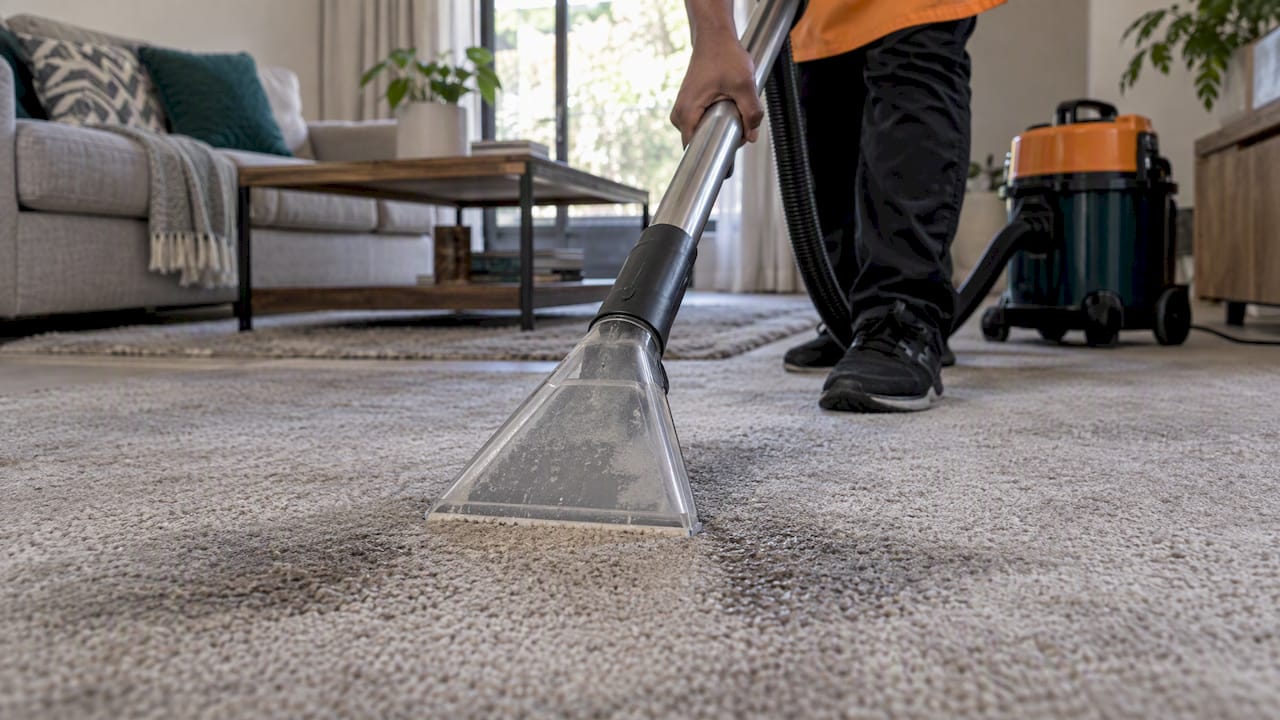
If the area is soaked through, a household cloth won’t cut it. A wet vacuum or extractor lifts moisture from deep in the pile and backing, which prevents the damage that comes from leaving carpet saturated for too long.
Removing dried mud and dry soil from carpet
Dried mud behaves completely differently from wet mud, and treating it the same way usually makes things worse. Wiping a damp cloth over dry mud smears it across the fibres and pushes particles further down into the pile.
- Let the mud dry completely before touching it. Trying to clean it while damp almost always spreads the stain.
- Vacuum thoroughly, then use the edge of a spoon or a blunt knife to lift any stubborn dry grit still caught in the fibres.
- Skip stiff brushes on delicate or looped piles. They can snag fibres or pull loops loose.
- Once the loose material is gone, treat any remaining mark with a pretested cleaner applied to a white cloth, blotting rather than rubbing, then rinse and blot dry.
- For wool or wool-blend carpet, stick to low-moisture methods and products that meet IWTO wool care guidance. Wool fibres absorb moisture differently than synthetics and can be damaged by over-wetting or harsh solvents.
Fresh stains are always easier to shift than ones that have had time to set, which is exactly why the IWTO guide recommends treating marks as soon as they’re noticed rather than waiting until the carpet is dry and convenient.
Set-in marks, colour transfer, and what not to try
Some mud marks are beyond a quick spot treatment, and knowing the warning signs early saves you from making a stain permanent. Watch for these red flags:
- Dye or colour transferring onto your cleaning cloth, which signals the carpet dye itself may be lifting.
- The stain reappearing (wicking) repeatedly after you’ve dried the area, even after it looked clean.
- Visible pile distortion, flattening, or fraying around the stain edges.
- A mark that’s been sitting for several days or longer without any treatment.
Avoid scrubbing hard, soaking the area repeatedly, or layering multiple cleaning products without rinsing in between: these habits are what turn a treatable stain into a permanent one. Carpet professionals follow a tested sequence to prevent exactly this outcome. The CRI 205 standard outlines a three-step approach: absorb or blot the spill, treat it with a tested method, and bring in a professional if the stain remains after that.
A professional cleaner will identify the stain type, apply pretested spotting agents, use controlled extraction equipment, groom the pile back into shape, and manage drying time carefully to prevent the wicking that ruins so many DIY attempts.
Prevention and routine care to stop mud stains returning
Most mud stains are easier to prevent than to clean, and a few small habits go a long way toward keeping your carpet looking its best.
- Vacuum high-traffic areas and entryways often; dry grit left in the pile grinds against fibres every time someone walks over it.
- Place walk-off mats at every entrance so coarse dirt and mud get trapped before they reach the carpet.
- Keep a small spot-cleaning kit ready: white cloths, a spoon, mild detergent, and a spray bottle make a world of difference when you catch a stain early.
- Ask about carpet protectors if your manufacturer recommends them, and schedule a professional deep clean roughly every 6 to 18 months depending on foot traffic.
Pro Tip: Rinse thoroughly after every DIY spot treatment. Leftover detergent residue acts like a magnet for dirt, which is often why the same spot seems to get dirty again and again.
Recommended household and commercial cleaning solutions for mud stains
For most household mud stains, a simple mild detergent solution does the job without introducing new risks. A few drops of dish soap or laundry detergent mixed into water, applied to a cloth rather than poured directly onto the carpet, lifts the stain while keeping you in control of how much moisture touches the fibres.
Oxygen-based cleaners are another common option for water-washable carpets. Product label instructions, such as those for OxiClean’s carpet stain solutions, typically call for applying the solution, letting it sit for a short window without drying out, then rinsing and blotting dry. Dilution ratios vary by product, so always follow what’s printed on the label rather than assuming one brand’s instructions apply to another.
For tougher or set-in residue, some guidance suggests a diluted vinegar rinse to cut through leftover detergent, though this should only be used after a spot test confirms it won’t affect your carpet’s colour or fibre. Never combine vinegar with bleach or other chemical cleaners in the same application.
Commercial-grade solutions and extraction equipment, the kind used in professional cleaning, are built to rinse more completely than a spray bottle and a cloth can manage. That’s largely why professionals get better results on deep-set or large-area stains: it’s not a stronger chemical, it’s more thorough removal of both the stain and the cleaning solution itself.
Step-by-step drying techniques after cleaning to prevent mold or odor
Getting the stain out is only half the job. A carpet that stays damp for too long invites mould, mildew, and musty odours, especially in thicker pile or underlay.
Start by blotting out as much moisture as possible with dry towels immediately after rinsing, pressing down firmly rather than rubbing. Change towels as they become saturated rather than continuing to use a wet one.
Once you’ve removed the excess moisture, point a fan directly at the damp area and keep it running for several hours. Open a window or run a dehumidifier if the room tends to stay humid, since trapped moisture in the air slows drying regardless of airflow at carpet level.
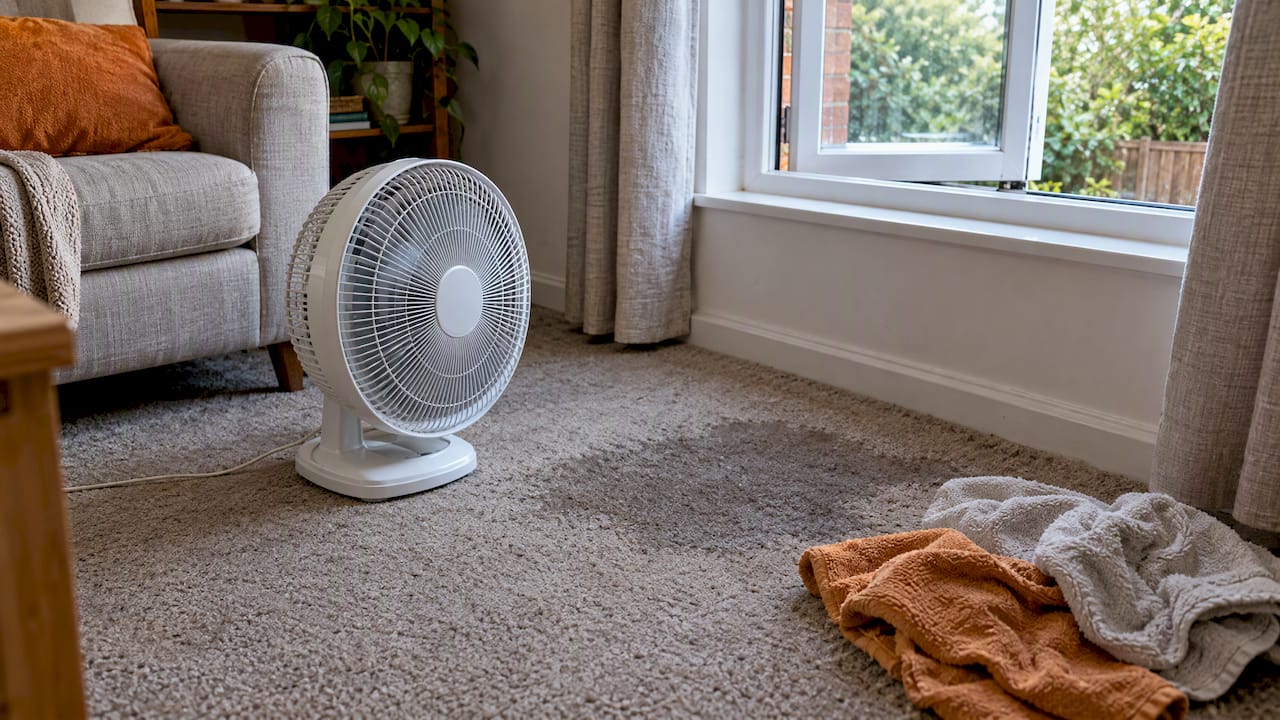
Avoid walking on the area or placing furniture back on it until it’s fully dry to the touch, both on the surface and a few centimetres down in the pile. Pressing weight onto damp carpet pushes moisture back down toward the backing, which is exactly where mould tends to start.
For larger wet areas, a wet vacuum or extractor removes far more moisture than blotting alone and cuts drying time significantly, which matters most in rooms with poor ventilation.
Precautions to avoid spreading the stain during cleaning
The way you clean matters as much as what you clean with. A few careless moves can turn a small, contained stain into a much bigger problem.
Always work from the outer edge of the stain inward. Starting in the centre and working outward pushes the mud further into clean carpet rather than lifting it out.
Blot, don’t scrub. Scrubbing motions grind mud particles deeper into the fibres and can fray or distort the pile, especially on cut-pile or looped carpets.
Use clean sections of cloth as you go, since a cloth that’s already saturated with mud just redeposits it onto a different part of the carpet. White, unprinted cloths are worth keeping on hand specifically for this reason, since dyed fabric can transfer colour onto wet fibres.
Avoid oversaturating the area with cleaning solution. Too much liquid spreads the stain outward through capillary action and soaks into the padding underneath, where it’s much harder to reach and can cause wicking days later as the carpet dries.
Specific advice for different carpet materials and pile types
Not all carpet responds to cleaning the same way, and the fibre type should guide your approach before you touch a cleaning product to it.
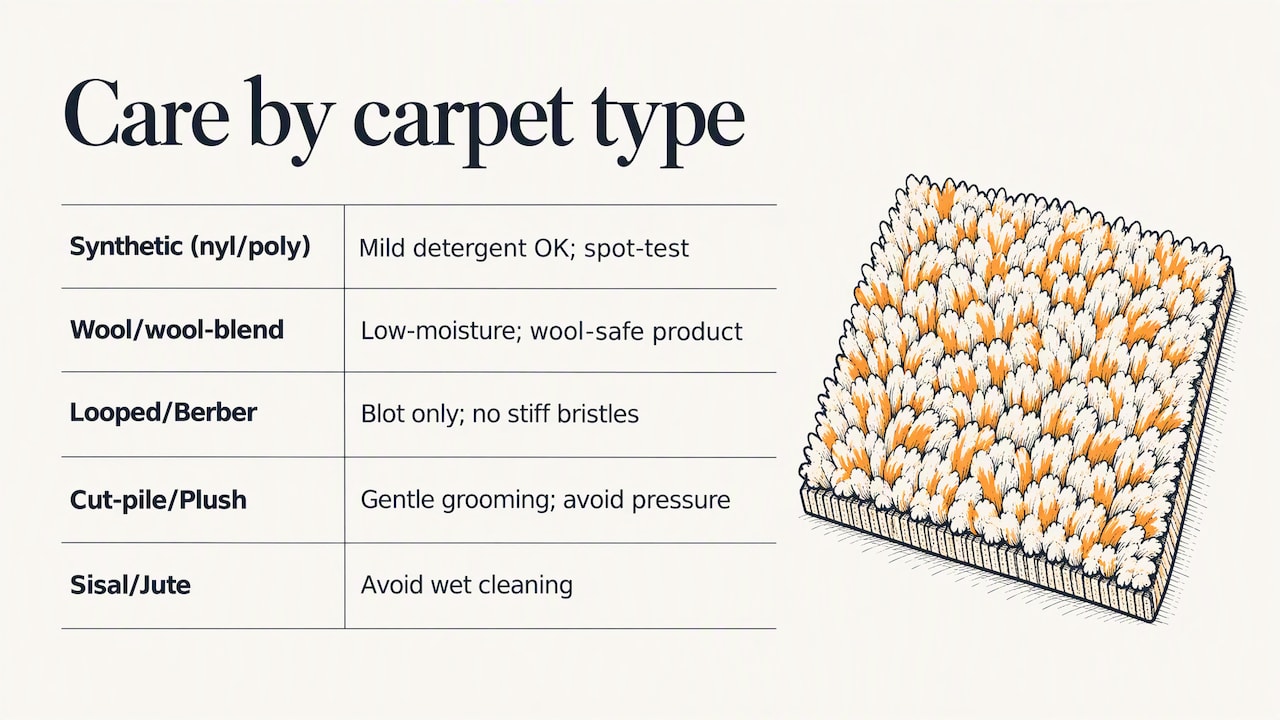
Synthetic fibres like nylon and polyester tend to be more forgiving. They resist staining better and can typically handle a wider range of mild detergents, provided you still spot-test first and rinse thoroughly afterward.
Wool and wool-blend carpets need a gentler touch. According to IWTO’s wool carpet care guidance, wool fibres are more sensitive to over-wetting and harsh chemicals, so low-moisture spot cleaning with wool-safe products is the safer route, especially for anything beyond a fresh, light stain.
Looped or Berber-style piles are prone to snagging, so skip anything with a stiff bristle and stick to blotting with a cloth or a soft brush attachment on your vacuum. Cut-pile and plush carpets show pressure marks and matting more easily, so grooming the pile gently with your fingers or a carpet rake after cleaning helps it recover its original texture.
Natural fibres like sisal or jute should generally avoid wet cleaning altogether, since they absorb moisture readily and can discolour or warp. If you’re unsure what your carpet is made of, check the manufacturer’s label before choosing a cleaning method.
When DIY makes sense and when to call a pro
Most fresh mud stains on synthetic carpet respond well to the blot, treat, and rinse approach, and there’s no need to call anyone for a small, recently tracked-in mark. Where DIY starts to fall short is with wool carpets, stains that have had days to set, or any situation where you’ve already tried cleaning and the mark keeps coming back.
Repeated wicking after drying usually means moisture and soil are still trapped in the backing, which a cloth and spray bottle simply can’t reach. At that point, professional extraction equipment does a more thorough job of removing both the stain and the residue left behind by earlier attempts.
We’ve built our carpet cleaning service around exactly these situations, using eco-friendly detergents and a 24-hour turnaround so a stubborn stain doesn’t sit untreated for long. Booking is handled entirely online.
— Mamero
Professional carpet cleaning when mud won’t budge
If you’ve worked through the steps above and the stain is still visible, or if you’re dealing with wool carpet, a large wet-through area, or simply don’t have the time to manage drying properly, that’s exactly when outsourcing makes sense. Carpet cleaning services may include pickup and delivery options, so you can avoid rearranging your day around a stain.

- Professional extraction handles large or set-in mud stains more thoroughly than a cloth and spray bottle.
- Eco-friendly detergents help keep the cleaning process safe for pets, kids, and sensitive wool fibres.
- Online booking means you can schedule service conveniently without waiting for a quote.
Carpet cleaning starts from R350, and you can check availability or book a pickup on our carpet cleaning page whenever you’re ready.
FAQ
How do you get mud out of carpet?
Remove loose or dried mud with a vacuum or a spoon first, then apply a mild detergent solution to a white cloth and blot the stain from the outside in. Rinse with plain water and blot again to remove any detergent residue, which helps prevent the stain from reappearing.
Does mud permanently stain?
Mud doesn’t have to be permanent if it’s treated promptly, but stains left untreated for several days become much harder to remove. According to IWTO’s wool carpet guidance, fresh stains are significantly easier to lift than old, set-in ones, which is why quick action matters more than the specific product used.
Can vinegar remove mud stains?
A diluted vinegar solution can help remove leftover detergent residue after cleaning, but it should always be spot-tested first since it isn’t suitable for every carpet fibre. Never combine vinegar with bleach or other cleaning chemicals, and avoid using it as a first-line treatment without testing.
How to get wet soil out of carpet?
Blot up excess moisture immediately with clean white cloths, working from the edges of the stain toward the centre rather than rubbing. Once the bulk of the moisture is gone, apply a mild detergent solution, blot again, rinse with plain water, and use a fan to speed up drying and prevent wicking.
Sources
This guide draws on the CRI 205 residential cleaning standard and CRI 204 commercial cleaning standard for spotting, testing, and extraction guidance, along with IWTO’s wool carpet care guide for wool-specific handling. Always check your carpet manufacturer’s label instructions before applying any cleaning product.

